Launch offer — valid today only

📄 Digital book in PDF · read it on your phone or print it

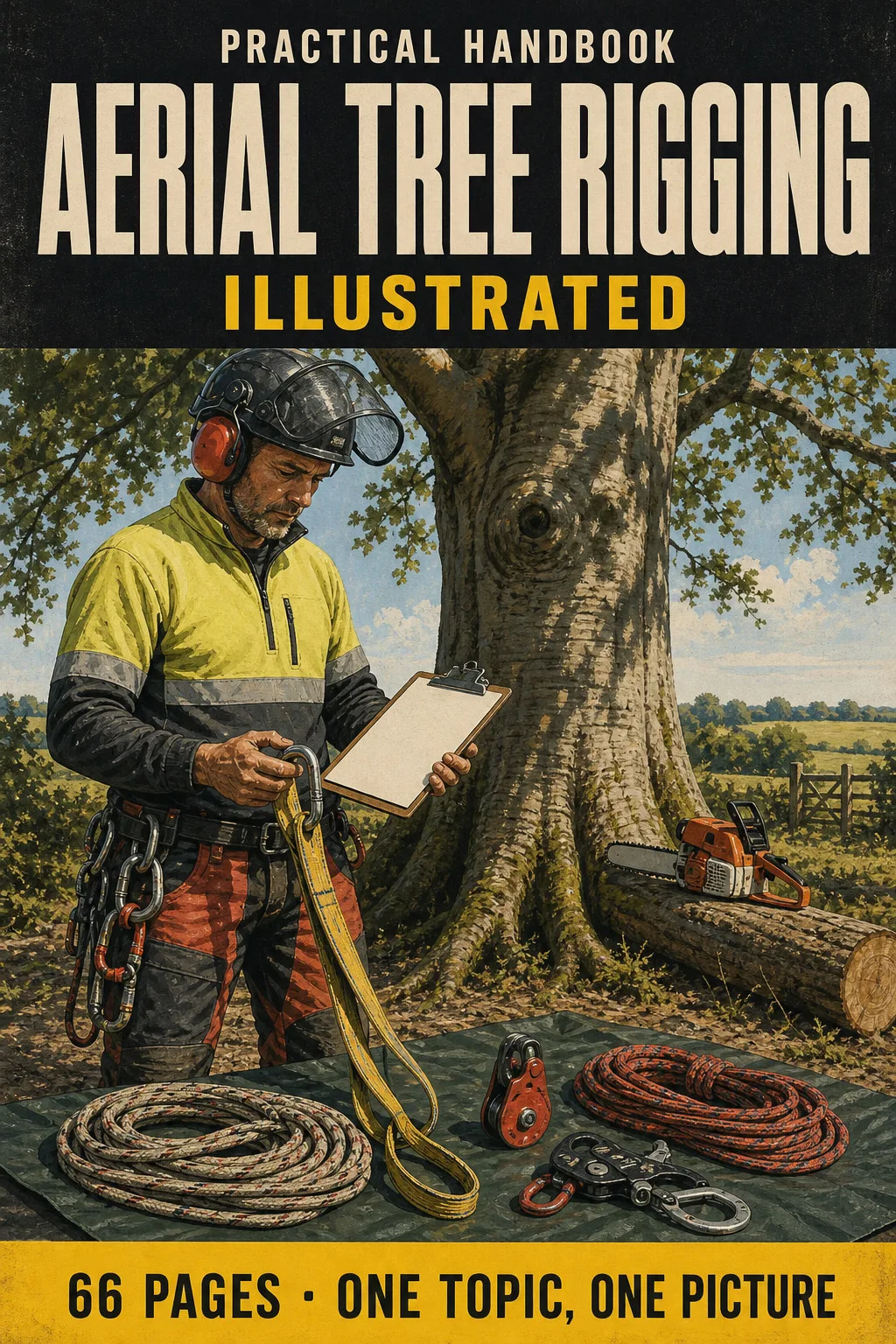
Aerial Tree Rigging in Drawings: Every Rig in the Same 6 Steps One Rig on Every Page

Written for UK tree work at height. Rigging kit and labels, safe working loads, knots, lowering devices, tip-tying, butt-hitching, speed lines and top-down dismantling: every topic on its own page, the drawing first, then what you need to remember. 66 illustrated pages.

START REVISING THIS WAY

🔒 Secure checkout · PDF by email · 30-day guarantee

Every topic, its own pageEach rig drawn with the rope path and the forces, the explanation alongside
66 illustrated pages8 parts, from the 6 steps of every rig to assessment day
Up-to-date sourcesWork at Height Regulations 2005, LOLER 1998 and BS 3998:2010
PDF by emailFormat

Look Inside the Book

Every page has one big drawing and a box with the loads, knots and steps you need to know:

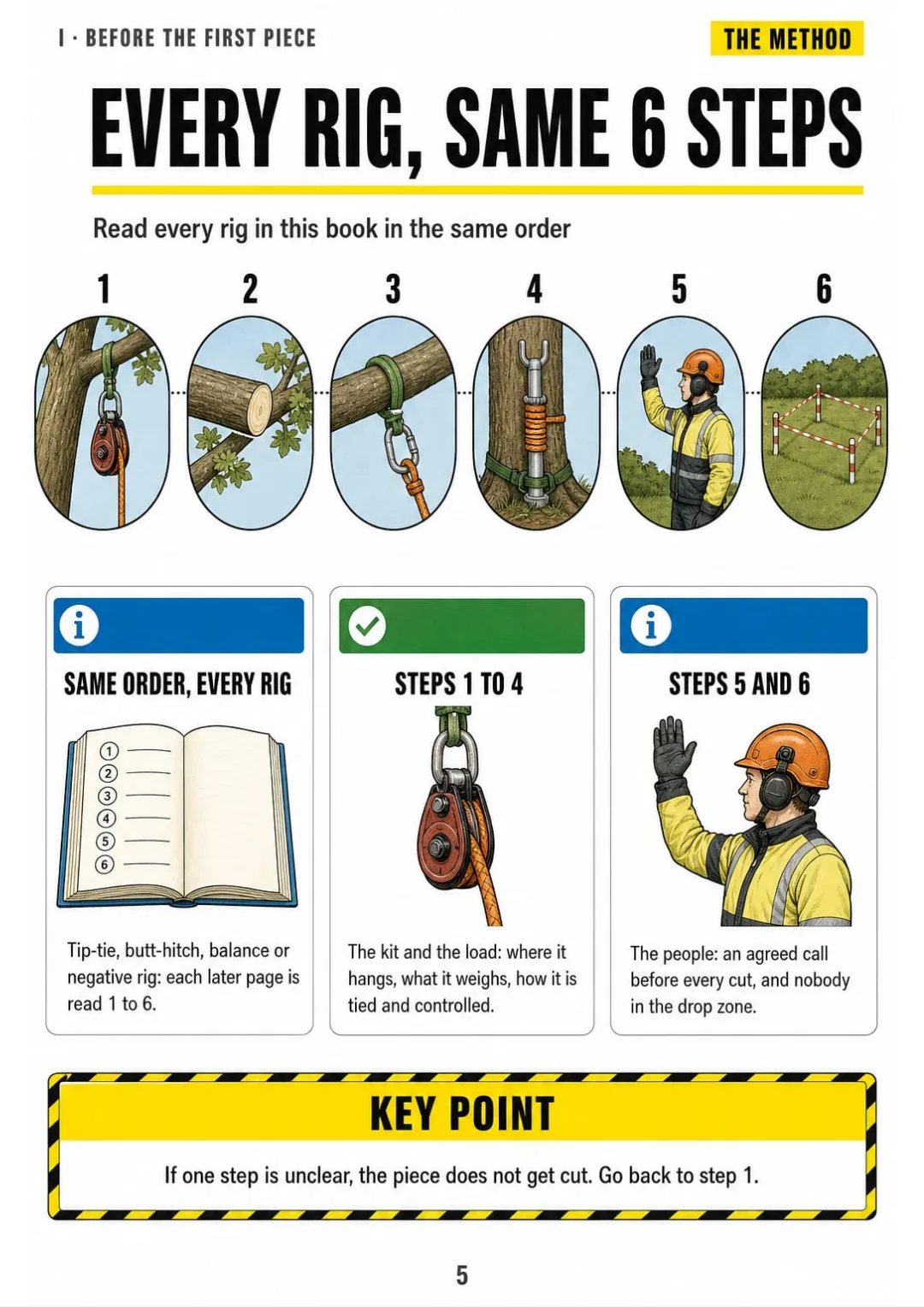
Anchor → piece → knot and sling → lowering device → call → exclusion zone
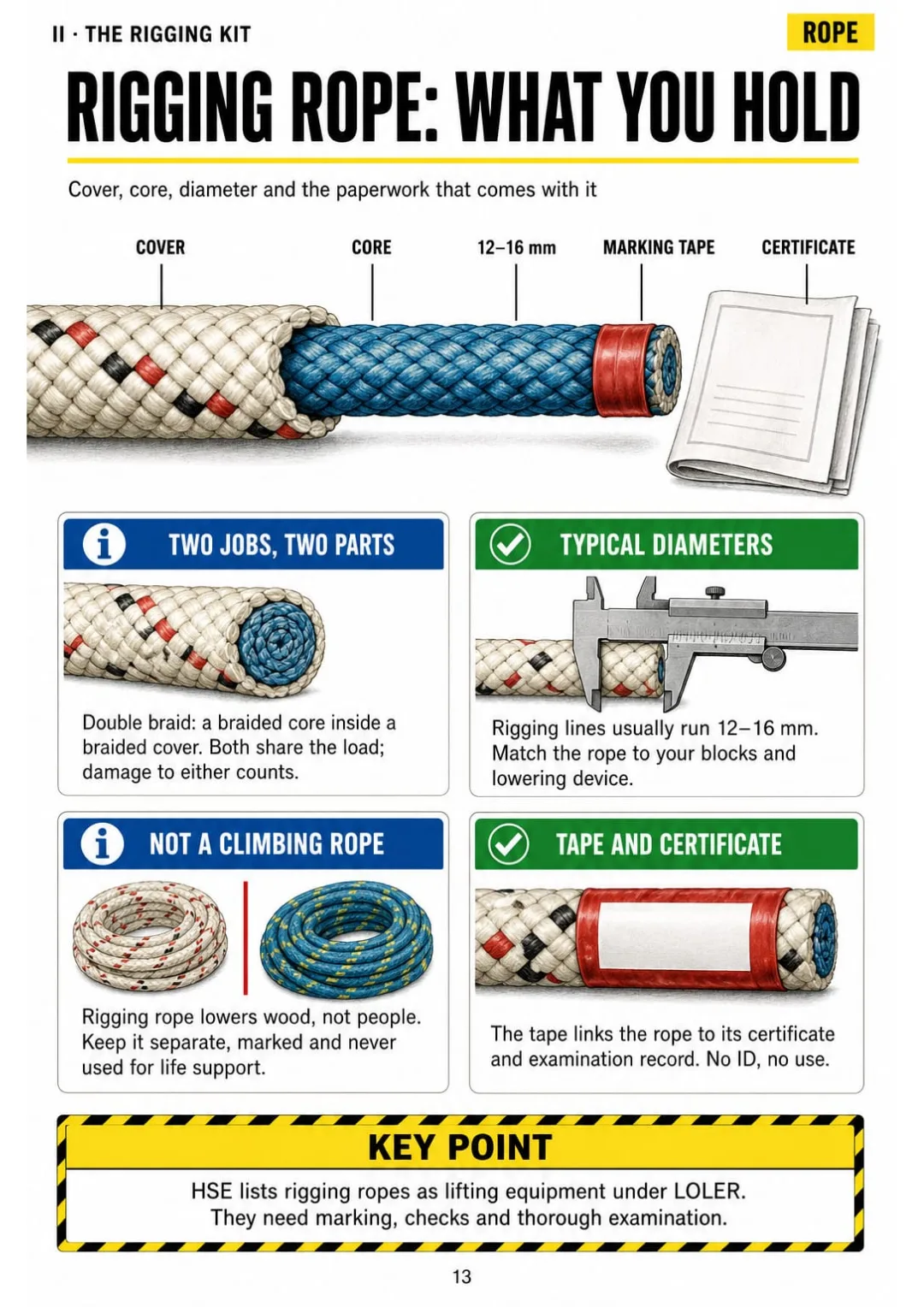
Double-braid rigging rope, 12–16 mm: cover, core, marking tape and certificate.
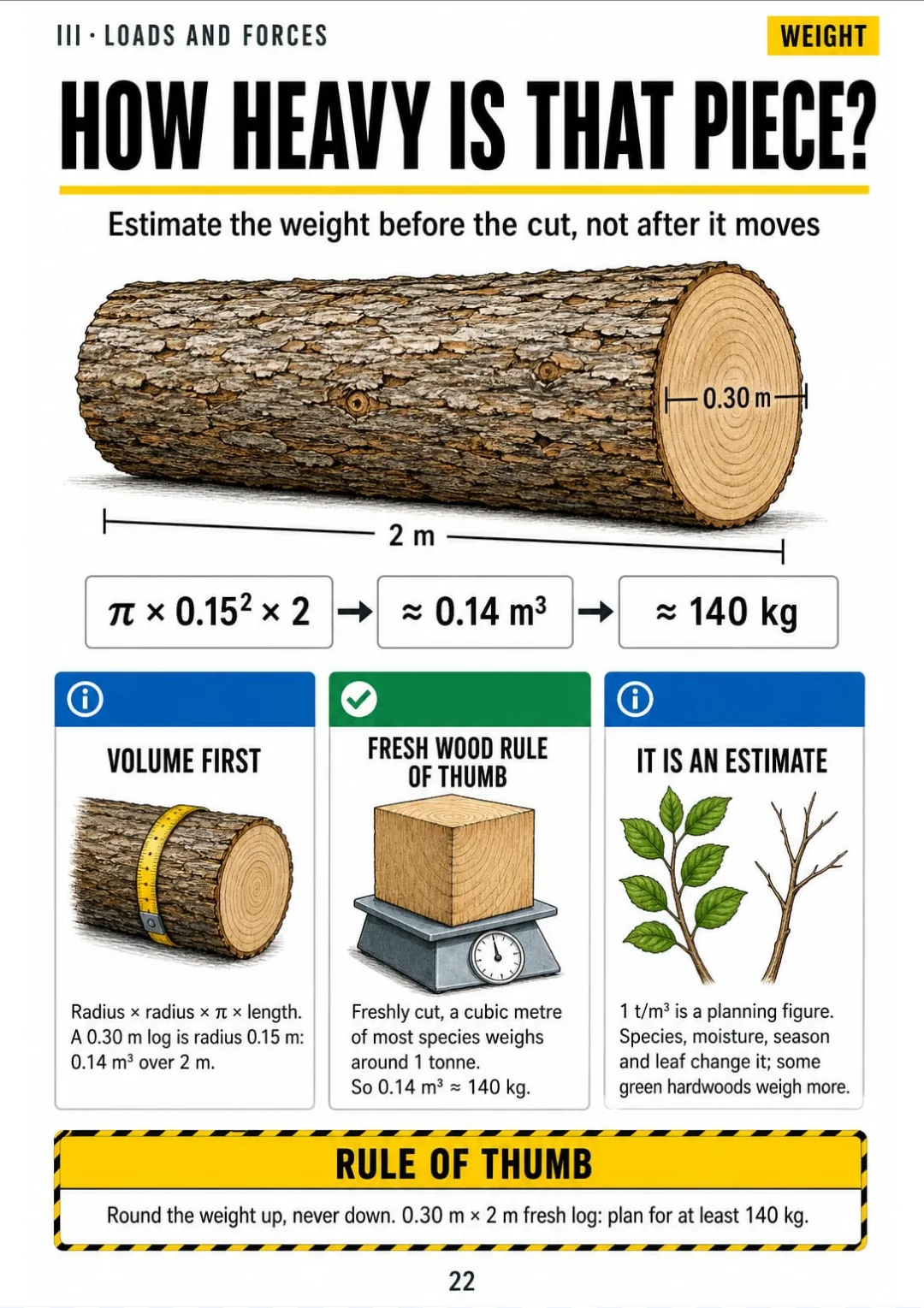
0.30 m × 2 m log → 0.14 m³ → about 140 kg, worked out on one page
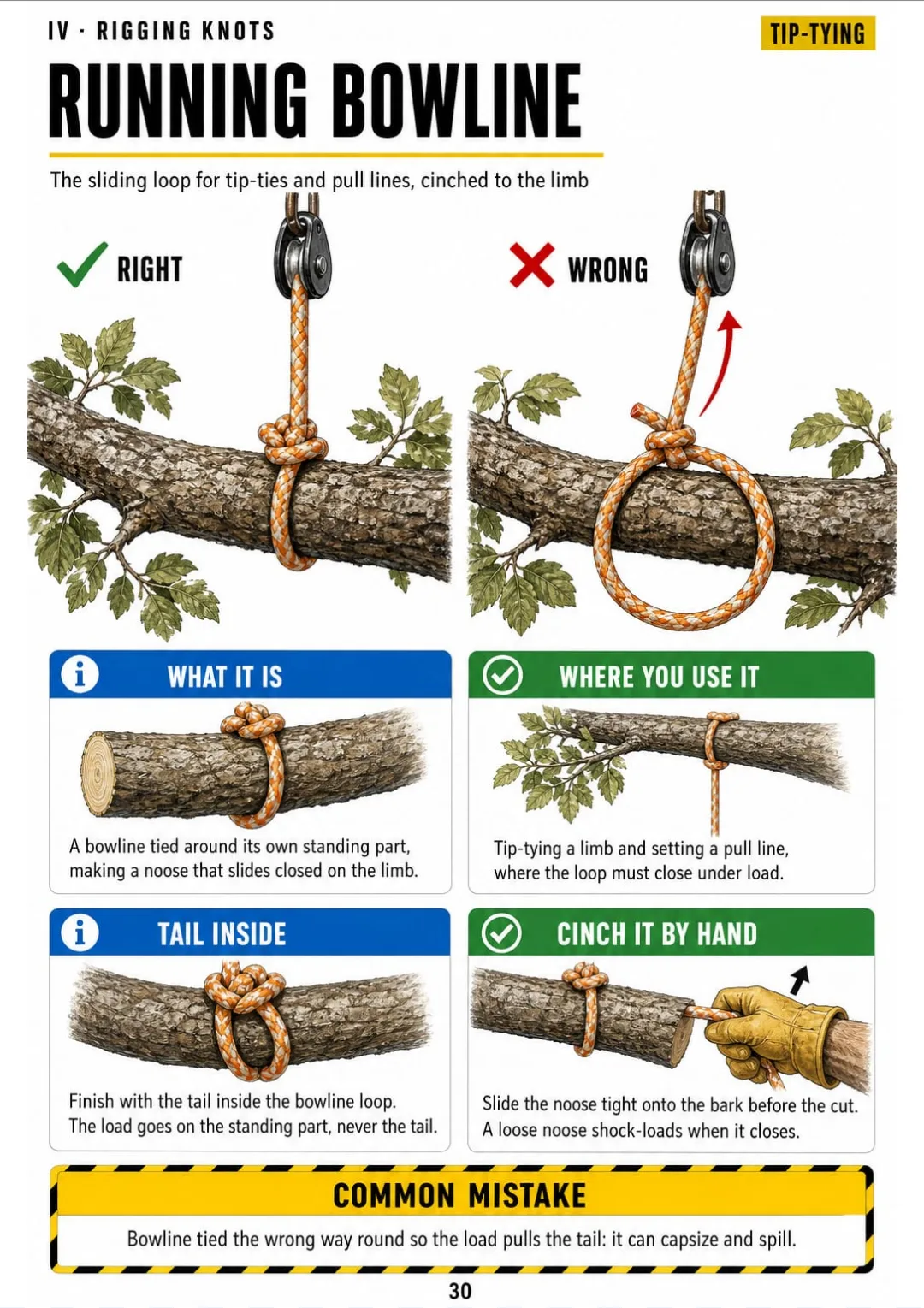
Running bowline: tail inside the loop, load on the standing part, noose cinched to the bark.
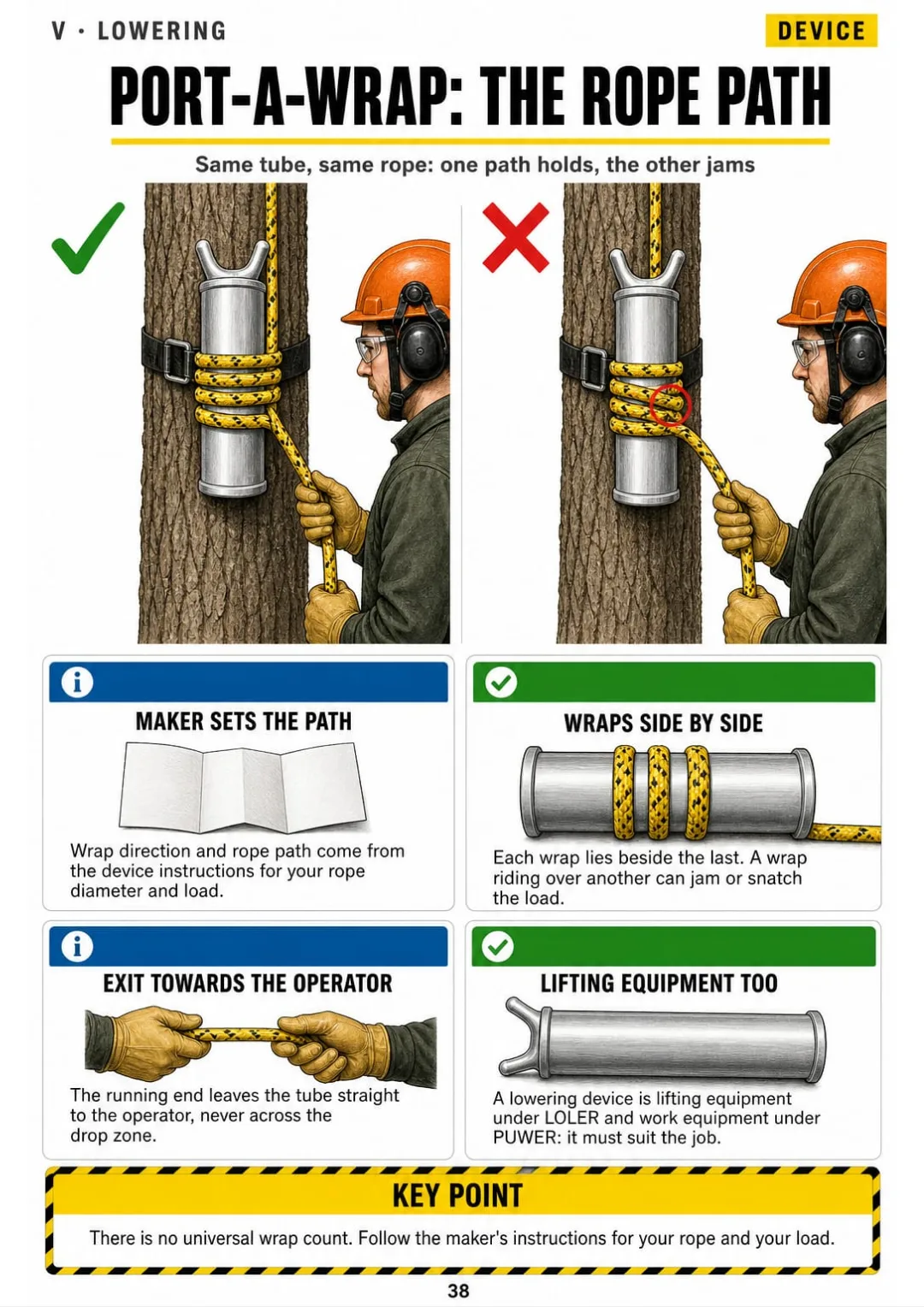
Right vs wrong: wrap direction and rope exit on a tube lowering device
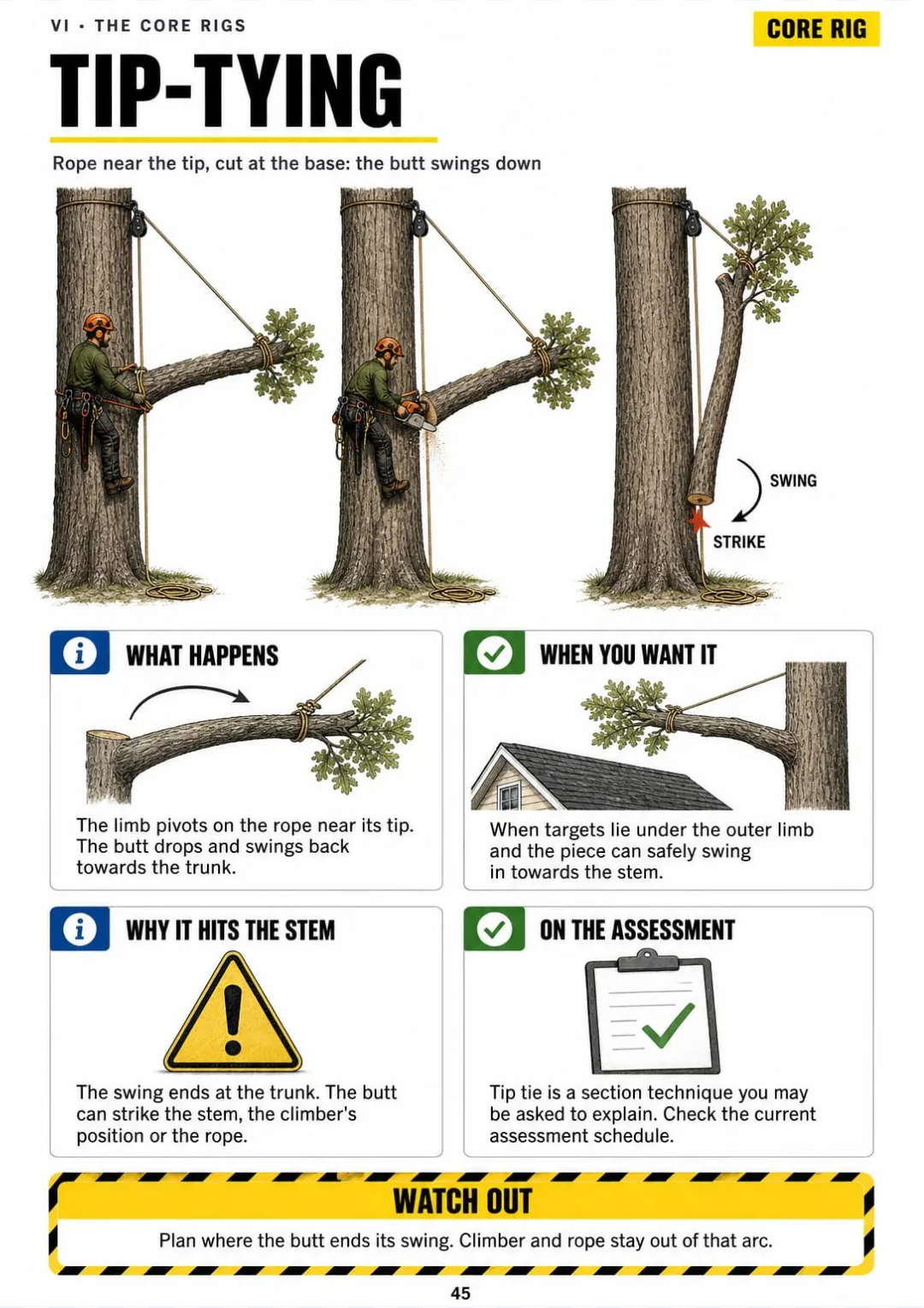
Tip-tying in 6 steps: rope near the tip, butt swings towards the stem
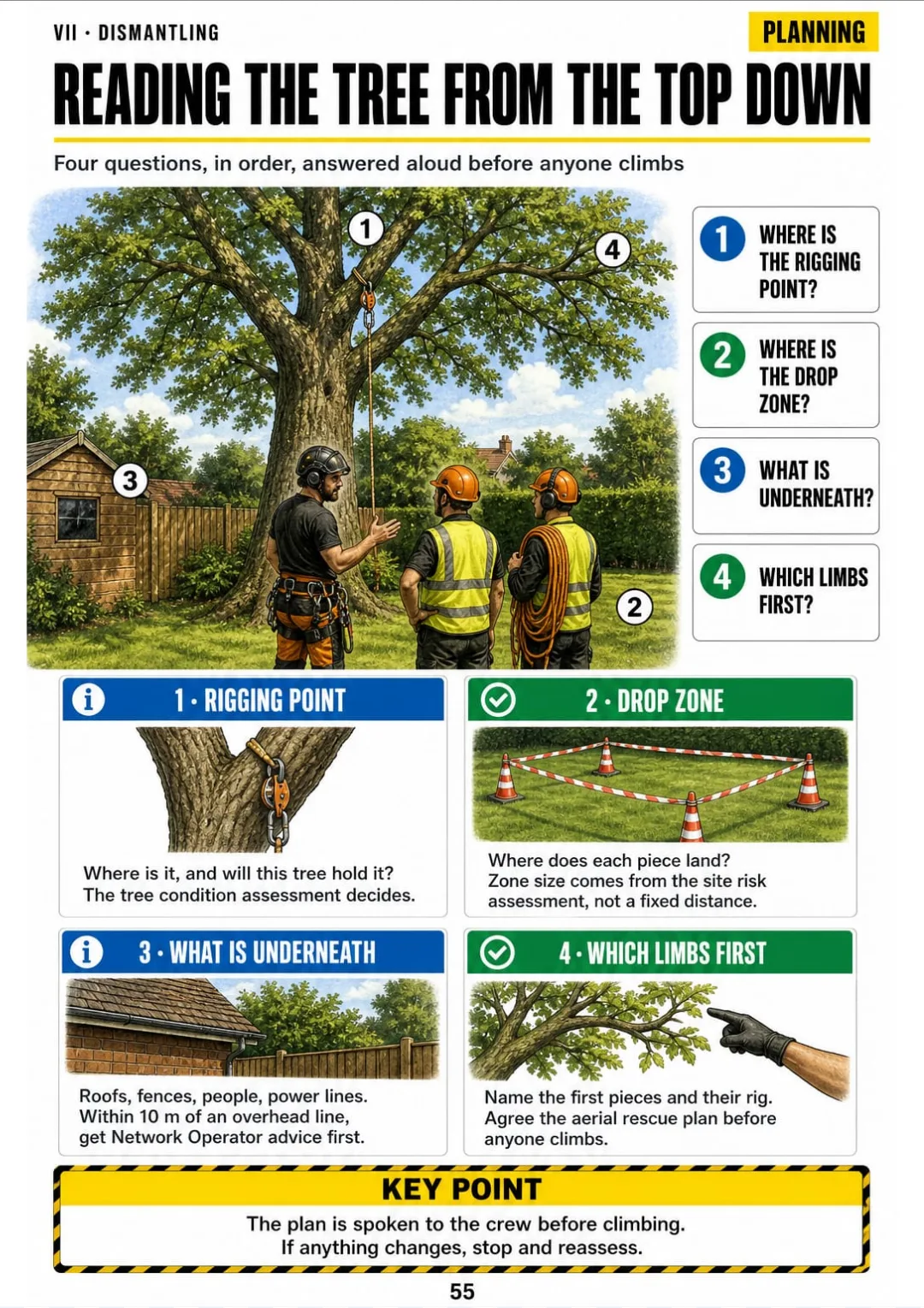
Rigging point, drop zone, targets, first limbs: planned with the crew before climbing.
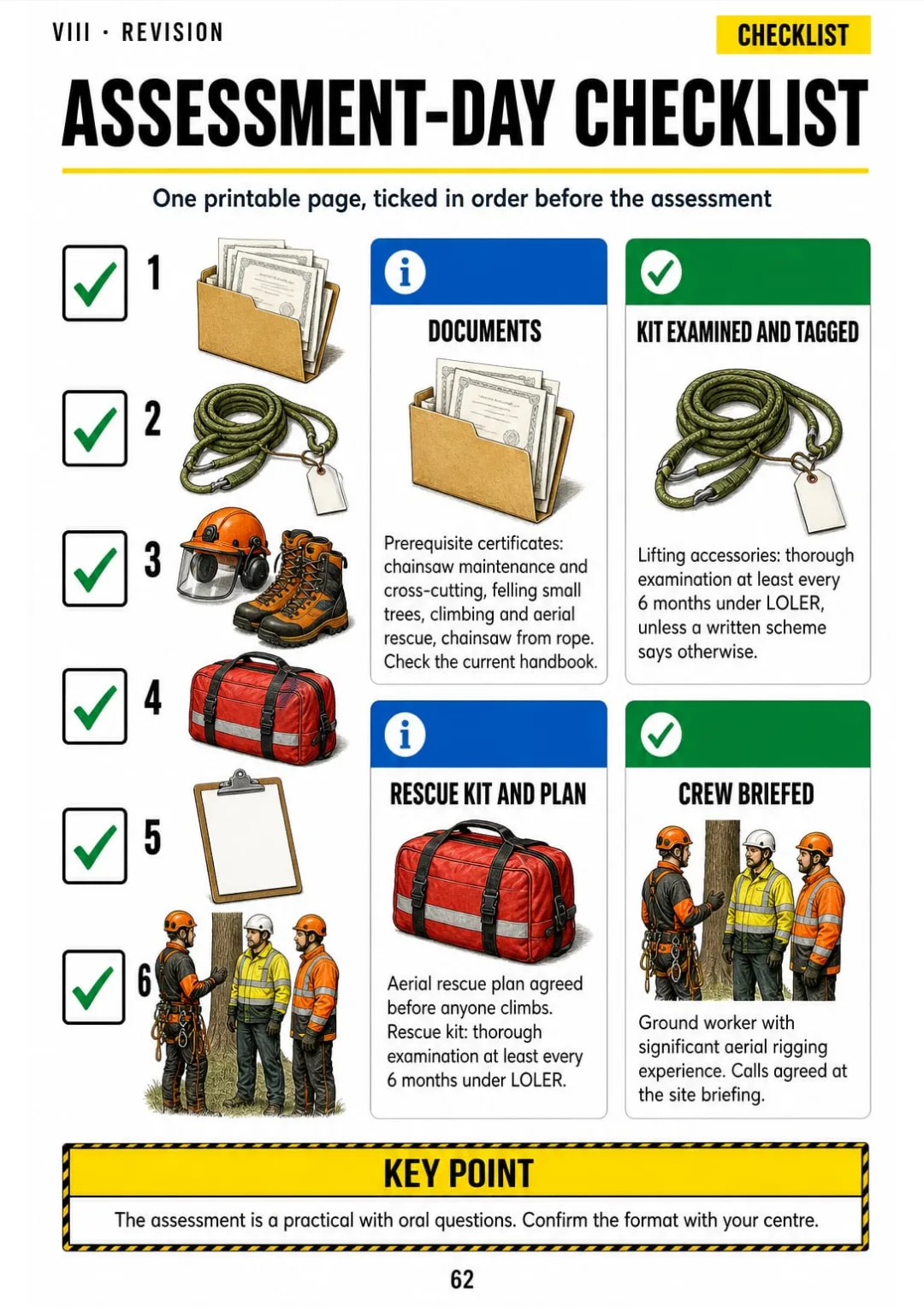
Documents, examined kit, rescue plan and briefed crew: one page, six ticks.

Swipe to see more →

These are real pages from the book. The table of contents is the full one: 8 parts and 62 topics.

The Problem Isn't You. It's How You Were Taught.

You're up the stem with a section below your next cut, and the ground lead calls up: how heavy is it? You know it's heavy. You just don't have a number.

The course notes cover it in one paragraph: diameter, length, volume, density, a formula with π in it somewhere. Read at night after a day on the saw, it doesn't stick.

0.30 m × 2 m log → 0.14 m³ → about 140 kg, worked out on one page

In the book, that log is a drawing: 0.30 m across, 2 m long, 0.14 m³, about 140 kg in green hardwood at roughly 1,000 kg per m³. Each step has its own box, and the whole sum fits on one page.

The same goes for the running bowline, the rope path on the lowering device, tip-tying, the exclusion zone and the cut order: each one has its own page.

You look at the piece and you know roughly what it weighs and which rig will take it, without going back to the notes.

COMPARE FOR YOURSELF

Same Topic, Two Ways to Study It

THIS
  • The manual: line after line
  • Ropes and rigging explained in words alone
  • You turn up to the assessment with doubts
Rigging lines used in arboricultural dismantling operations are typically of double-braid construction, comprising an outer braided cover and an independent braided core, each contributing a proportion of the rope's overall strength. Common diameters fall within the 12–16 mm range, selection being dependent upon anticipated loads, compatibility with blocks and lowering devices, and handling characteristics. Each rope should be accompanied by a manufacturer's certificate stating minimum breaking strength and should carry marking tape permitting traceability to inspection records, in accordance with the applicable examination regime.
FOR THIS
  • The rope cut open in one drawing
  • Diameter, marking and certificate in a box
  • You see it and you get it
Double-braid rigging rope, 12–16 mm: cover, core, marking tape and certificate.
CONTENTS

Take a Look at the 8 Parts and 62 Topics

Before the first piece, the rigging kit, loads and forces, rigging knots, lowering and the ground crew, the core rigs, dismantling a whole tree and assessment day: 66 pages, all illustrated.

IBefore the First Piece · pp. 5-12
  1. Every Rig in the Same 6 Steps
  2. What the Aerial Rigging Assessment Looks At
  3. Three Regulations, One Job
  4. The Site-Specific Risk Assessment
  5. Who Does What: Climber, Ground Lead, Lowering Operator
  6. The Exclusion Zone, Drawn
  7. Aerial Rescue Is Planned First
  8. Overhead Power Lines Near the Tree
IIThe Rigging Kit · pp. 13-21
  1. Rigging Rope: What You Are Holding
  2. Reading the Label: MBS and WLL
  3. Slings: Round, Eye-to-Eye, Whoopie, Loopie
  4. Rigging Blocks and Pulleys
  5. Rigging Rings and Friction Savers
  6. Shackles and Connectors
  7. Lowering Devices: Port-a-Wrap and Bollard
  8. Pre-Use Check: Ropes and Slings
  9. Thorough Examination and Records
IIILoads and Forces · pp. 22-29
  1. How Heavy Is That Piece?
  2. Static Load and Shock Load
  3. The Block Doubles the Load
  4. Angle at the Block Changes the Force
  5. Weakest Link: A Worked Safe Load
  6. Sling Choke and Hitch Reductions
  7. Knots Cost Strength
  8. Choosing the Rigging Point
IVRigging Knots, Right and Wrong · pp. 30-37
  1. Running Bowline
  2. Timber Hitch with Half Hitches
  3. Clove Hitch with a Stopper
  4. Cow Hitch and Girth Hitch for Slings
  5. Marlinspike Hitch
  6. Alpine Butterfly and Mid-Line Loops
  7. Friction Hitches on Rigging Lines
  8. Dressing, Setting and Tails
VLowering and the Ground Crew · pp. 38-44
  1. Port-a-Wrap: The Rope Path
  2. Bollard on the Stem
  3. How Many Wraps?
  4. Letting It Run
  5. Safe Hands on the Ground
  6. Calls and Signals
  7. Clearing the Landing Zone
VIThe Core Rigs · pp. 45-54
  1. Tip-Tying
  2. Butt-Hitching
  3. Balancing a Limb: Two Points
  4. Natural Crotch or Block?
  5. Negative Rigging
  6. Redirects for Side Control
  7. Speed Lines
  8. Tag Lines and Pull Lines
  9. Cuts in the Canopy
  10. Over a Roof or Glasshouse
VIIDismantling a Whole Tree · pp. 55-61
  1. Reading the Tree from the Top Down
  2. The Cut Order, Numbered
  3. Limbs Before the Top
  4. Sectioning the Stem
  5. Climber Position on the Stem
  6. The Last Section: Fell or Lower
  7. Dead Wood and Brittle Trees
VIIIRevision and Assessment Day · pp. 62-66
  1. Assessment-Day Checklist
  2. What Assessors Most Often Ask
  3. The Most Frequent Load Mistakes
  4. The Most Frequent Knot and Device Mistakes
  5. The 6 Steps on One Page

One Page, One Topic, All Clear

Think of it this way:

Ten metres up an oak, a heavy limb hangs over the conservatory. You have to choose the rig, natural crotch or block, tip-tie or butt-hitch, and brief the ground crew before you cut.

In the book you open the tip-tying page and see it drawn: the rope near the tip, the rigging point above, the butt swinging towards the stem, with the six steps in order beside it.

Right vs wrong: wrap direction and rope exit on a tube lowering device

Same with the running bowline, the rope path on the lowering device, the weight of a log, speed lines and the cut order: each one on its own page.

Aerial Tree Rigging Illustrated is 8 parts and 62 topics, all drawn, and it ends with an assessment-day checklist, the most frequent mistakes and the 6 steps on one page.

What you see drawn, you don't have to memorize.

What's Inside Aerial Tree Rigging Illustrated:

Ipp. 5-12

Before the First Piece

The 6 steps of every rig, what the assessment looks at, the three regulations, the site risk assessment, who does what, the exclusion zone, the rescue plan and overhead power lines.

IIpp. 13-21

The Rigging Kit

Rigging rope, reading MBS and WLL on the label, slings, blocks, rings, shackles, lowering devices, the pre-use check and thorough examination records.

IIIpp. 22-29

Loads and Forces

So you can put a number on every piece: how heavy it is, static and shock loads, why the block doubles the load, angles, a worked safe load, sling and knot reductions and choosing the rigging point.

IVpp. 30-37

Rigging Knots, Right and Wrong

Running bowline, timber hitch, clove hitch with a stopper, cow and girth hitches, marlinspike, alpine butterfly, friction hitches and dressing the knot, each tied right and wrong.

Vpp. 38-44

Lowering and the Ground Crew

The lowering device rope path, the bollard on the stem, how many wraps, letting it run, safe hands, calls and signals, and clearing the landing zone.

VIpp. 45-54

The Core Rigs

Tip-tying, butt-hitching, balancing a limb, natural crotch or block, negative rigging, redirects, speed lines, tag lines, cuts in the canopy and rigging over a roof.

VIIpp. 55-61

Dismantling a Whole Tree

Reading the tree from the top down, the numbered cut order, limbs before the top, sectioning the stem, climber position, the last section and brittle trees.

VIIIpp. 62-66

Revision and Assessment Day

Assessment day sorted: the checklist of documents, examined kit, rescue plan and briefed crew, what assessors most often ask you to explain, and the 6 steps on one page to look at last.

At the end of the book: An assessment-day checklist, what assessors most often ask you to explain and the 6 steps on one page.
Plus: 2 Free Books

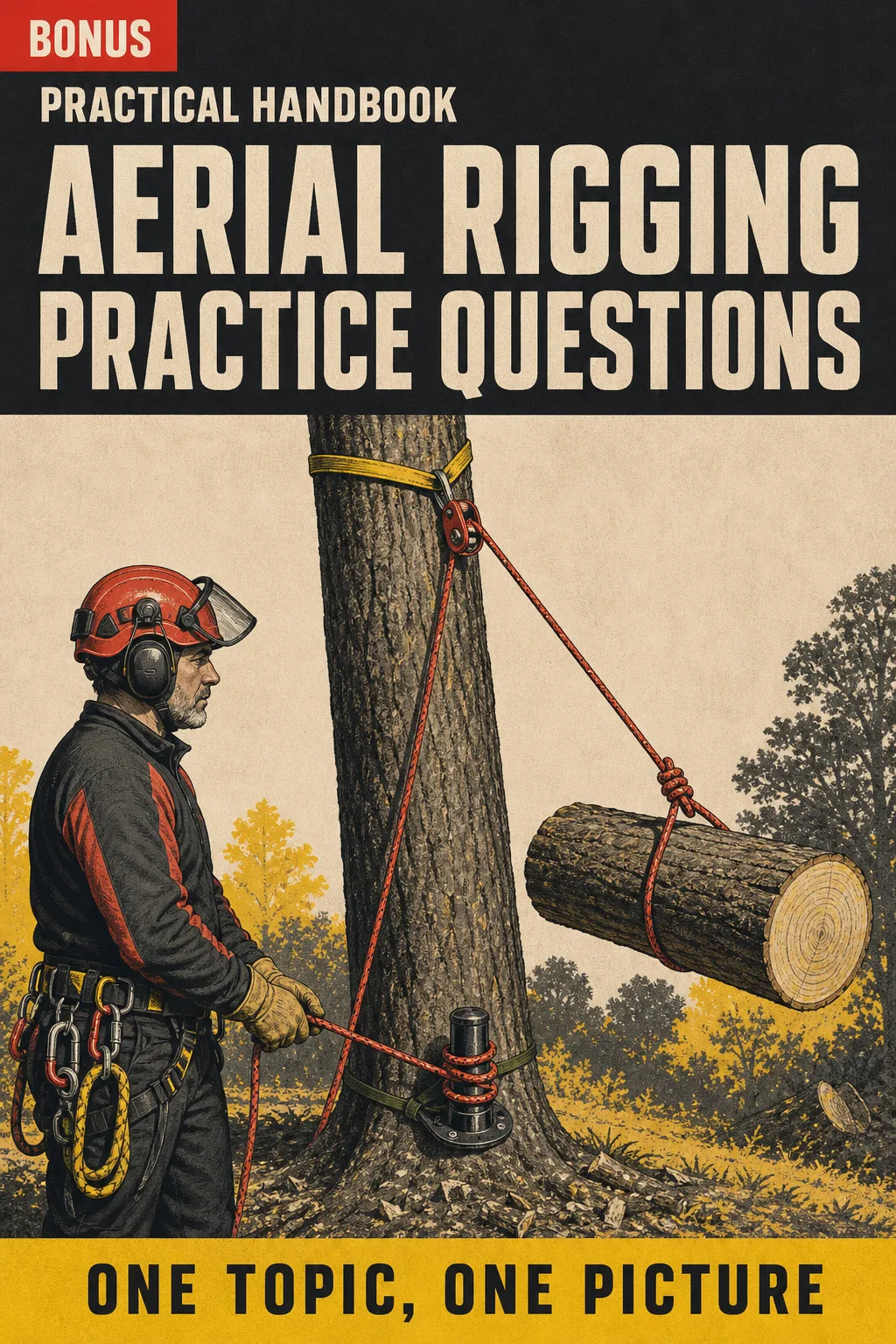
Aerial Rigging Practice Questions

BONUS 1: «Aerial Rigging Practice Questions»

Value on its own: US$ 17.90

Assessment-style questions with clear answers on loads, knots, devices and dismantling, so you can check what has stuck before the assessor asks you.

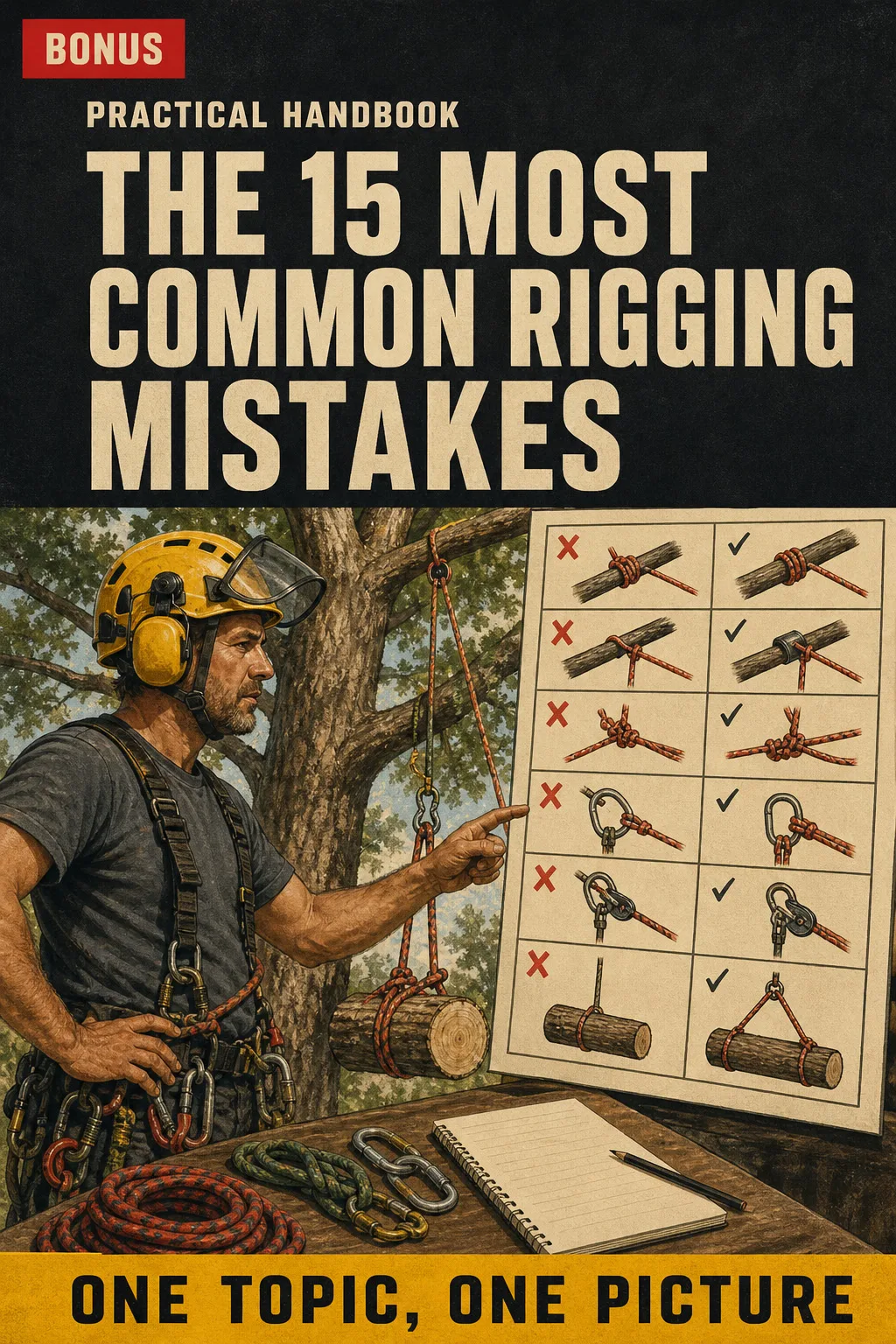
The 15 Most Common Rigging Mistakes

BONUS 2: «The 15 Most Common Rigging Mistakes»

Value on its own: US$ 14.90

Each frequent rigging mistake drawn before and after, from a sling choked in the wrong place to a friction device wrapped the wrong way, so you can spot it at a glance.

Aerial Tree Rigging Illustrated with 2 Free Books

  • Aerial Tree Rigging Illustrated: 66 illustrated pagesUS$ 63
  • BONUS 1: Aerial Rigging Practice QuestionsUS$ 17.90
  • BONUS 2: The 15 Most Common Rigging MistakesUS$ 14.90
  • High-resolution PDF to printIncluded
Total value US$ 95.80
YOUR PRICE:
US$ 27
You save US$ 68.80
YES, I WANT AERIAL TREE RIGGING ILLUSTRATED FOR US$ 27

📄 This is a digital PDF book sent to your email: nothing is printed or shipped.

Secure purchaseEncrypted payment30-day guarantee

PDF by email: We email you Aerial Tree Rigging Illustrated as a PDF, together with the two free books. It's a single payment: no installments, no extra charges.

Who This Book Is For

You're on the aerial rigging course

You're on the aerial rigging course

Every rig, knot and load from the course sits on its own page, drawn, so the evening revision follows the same order as the practical.

Your assessment is close

Your assessment is close

You go through the 6 steps, the worked loads and the checklist page and turn up knowing what to say for every piece you rig.

You already rig on the job

You already rig on the job

You keep it printed in the van: cut order, wraps and calls to check before a big dismantle over a house or a garden.

Everything You Get Today

US$ 95.80US$ 27
YES, I WANT AERIAL TREE RIGGING ILLUSTRATED FOR US$ 27

📄 This is a digital PDF book sent to your email: nothing is printed or shipped.

30DAYS
GUARANTEE

30-Day Guarantee

Try Aerial Tree Rigging Illustrated for 30 days, bonus books included.

We refund everything if the file won't open, if the book isn't what you see here, if you were charged twice or if the email doesn't arrive. Just email us.

You pay once. No subscriptions.

Frequently Asked Questions

Is it for me if I've been rigging for years?

Yes. It doesn't teach you to climb: it puts what you already do in one order, with the loads, knots and calls the assessor will ask you to explain.

Where does the content come from?

From UK law and guidance for tree work at height: the Work at Height Regulations 2005, LOLER and PUWER 1998, the industry code of practice for tree work at height, BS 3998:2010 and HSE guidance on overhead power lines. It's written for UK candidates on an aerial tree rigging course and assessment, such as City & Guilds NPTC or Lantra, not for US standards: metres, kilos and UK rules. Regulatory figures are flagged so you can check them against the current edition.

Is it official material?

No. It's an independent study guide, not affiliated with or endorsed by City & Guilds, NPTC, Lantra, HSE or any awarding organisation or authority. It doesn't give you a certificate or a ticket: that only comes from the course and passing the assessment.

Does it replace the course?

No. It doesn't replace the practical course, the assessment or the site risk assessment. It's for revising before and keeping to hand afterwards.

Are the practice questions the ones from the assessment?

No. They're written for this book, in the style of the topics covered, to check what has stuck.

When and how do I get it?

The book and the 2 bonus books come as PDFs by email, to the address you enter at checkout.

Do I have to pay every month?

No. It's a one-off payment.

Can I have it on paper?

Yes. The PDF is ready to print, so you can keep a copy in the van.

How does the refund work?

You have 30 days. We refund everything if the file won't open, if the book isn't what you see on this page, if you were charged twice or if the email doesn't arrive: just email us.

Before You Close This Page

No more rereading notes that don't stick.

Loads, knots and rope paths: you see them drawn, and it clicks.

You turn up to the assessment knowing where everything is.

Drawings make studying faster.

The book is right below.

One-time payment: US$ 27 · Guarantee: 30 days · PDF by email

YES, I WANT AERIAL TREE RIGGING ILLUSTRATED FOR US$ 27

📄 This is a digital PDF book sent to your email: nothing is printed or shipped.